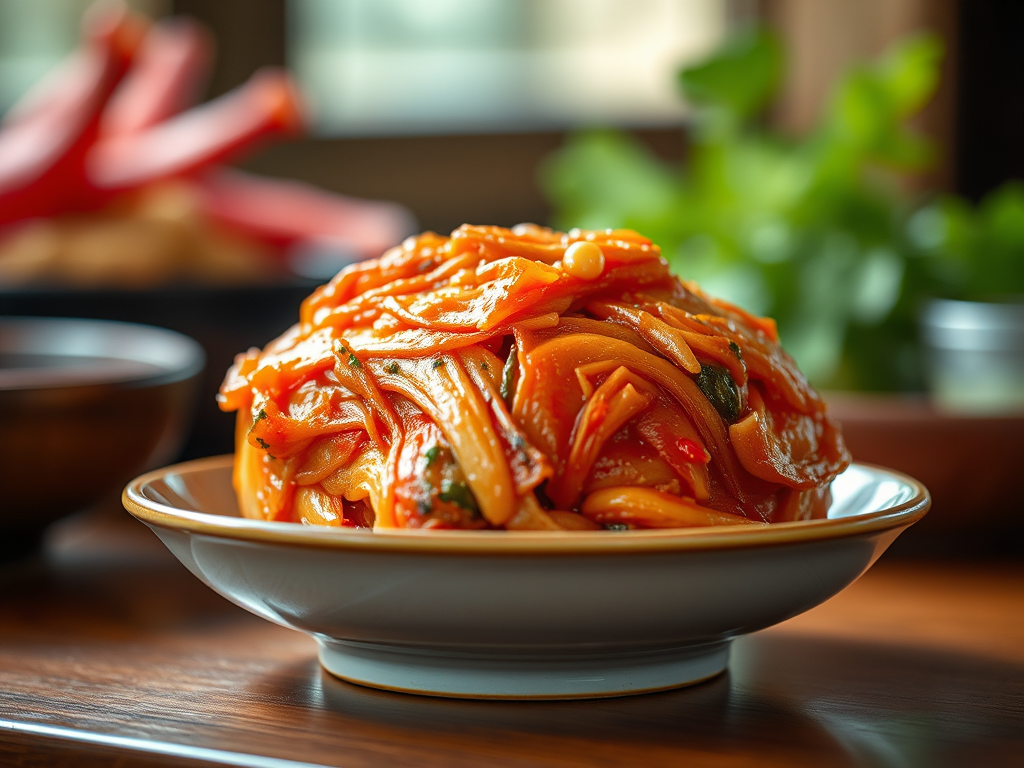
Making kimchi at home is a rewarding process that allows you to customize the flavors and ingredients to your liking. Below is a basic recipe for traditional napa cabbage kimchi (baechu kimchi), along with step-by-step instructions.
Ingredients For the Kimchi:
1 large napa cabbage (about 2 kg)- 1/2 cup sea salt (or kosher salt)- Water (for soaking)
For the Kimchi Paste:
1 tablespoon grated ginger – 1 tablespoon minced garlic (about 5-6 cloves)- 2 tablespoon of sweet rice/gluteneous – 2 cups of water – 1 tablespoon sugar (optional, helps with fermentation)- 1/4 cup fish sauce (or soy sauce for a vegetarian option)- 1/4 cup Korean red pepper flakes (gochugaru) – adjust to taste for spiciness- 1 medium carrot, julienned (optional)- 4-5 spring onions, chopped- 1 daikon radish, julienned (optional) and 1 medium size pear (taste better – optional)
Instructions
Step 1: Prepare the Cabbage1. **Cut the Cabbage**: Slice the napa cabbage in half lengthwise and then cut each half into quarters. You can also cut it into smaller pieces if you prefer.
Salt the Cabbage: In a large bowl or basin, dissolve the salt in water. Submerge the cabbage pieces in the salty water, ensuring they are fully covered. Place a plate on top to weigh them down if necessary. Let it soak for 1 to 2 hours, turning occasionally.**Rinse and Drain**: After soaking, rinse the cabbage pieces thoroughly under cold water to remove excess salt. Drain well and set aside.Step 2: Make the Kimchi Paste
Combine Ingredients: In a pan, combine water and sweet rice stir and put on the stove with medium heat till boild. Take off the stove add the grated ginger, minced garlic, sugar (if using), fish sauce (or soy sauce), and Korean red pepper flakes (gochugaru). Adjust the amount of gochugaru based on your spice preference.**Mix Well**: Stir the mixture until it forms a paste. You can add a bit of water if needed to achieve a spreadable consistency.Step 3: Combine Cabbage and Paste
Mix in Vegetables: In a large mixing bowl, combine the drained cabbage, julienned carrot, chopped green onions, and daikon radish (if using).**Add Paste**: Wearing gloves (to protect your hands from the spice), add the kimchi paste to the cabbage and vegetables. Mix thoroughly, ensuring all the ingredients are well coated with the paste.Step 4: Pack the Kimchi
**Prepare Storage Jars**: Sterilize glass jars or airtight containers. Pack the kimchi mixture tightly into the jars, leaving some space at the top for fermentation gases to escape.**Seal the Jars**: Seal the jars, but not too tightly, as the kimchi will expand during fermentation.Step 5: Fermentation
**Room Temperature Fermentation**: Leave the jars at room temperature for 1 to 5 days, depending on your taste preference. Check daily and push down the kimchi to keep it submerged in its juices. Taste it after a couple of days to see if it has reached your desired level of fermentation.
**Refrigeration**: Once fermented to your liking, transfer the jars to the refrigerator. Kimchi can be consumed right away, but it will continue to develop flavor over time.
### Tips- **Storage**: Kimchi can last for several weeks to months in the refrigerator. The flavor will become more intense as it ferments.- **Variations**: Feel free to experiment with additional ingredients such as apple, pear, or other vegetables.- **Serving**: Kimchi can be enjoyed on its own, as a side dish, or incorporated into various dishes like fried rice, stews, or pancakes.
### Conclusion Making kimchi at home is a fun and fulfilling process. The basic recipe can be adjusted to suit your taste preferences, and the fermentation process not only enhances the flavor but also provides numerous health benefits.
Enjoy your homemade kimchi!
 Exploring The Unknown with Me
Leave a comment